What To Do After An Accident in Los Angeles, CA
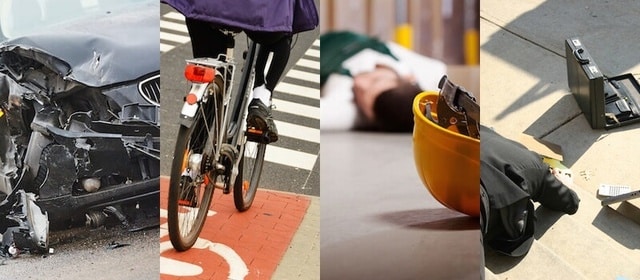
Auto and Work Accident Attorneys Los Angeles
1. Stay at the Scene.
Never leave the scene of an accident unless a medical emergency requires it. It is generally preferable to wait for an ambulance and qualified medical personnel to arrive. You should stay at the scene until you have provided your full name and address to a police officer or at least to the other driver. You should not leave the scene of an accident in which you have been involved as it can result in criminal charges.
2. Seek Help.
Call 911 to report where the accident occurred and if anyone was injured so that police and ambulance(s) can be called. If these numbers are not available, call local police or dial “0” for operator assistance.
3. Provide Assistance.
Attend to the medical needs of others if you can. Do not move anyone unless necessary to avoid more serious injuries. Unless you have received adequate medical training, only take basic emergency measures involving bleeding, breathing, and shock if you are qualified to provide such assistance.
4. Warn Others.
Take immediate steps to prevent further injuries — first warn other drivers of the accident, and second, move the vehicles, but only if necessary. If you cannot do so due to your injuries or because you are helping others, ask someone to signal other vehicles from a safe position. Use flares, reflectors, flashlights, or even the car’s lights, particularly if it is nighttime.
5. Report the Auto Accident.
Provide the police officer who comes to the scene your full name, address, and other identifying information, and show your driver’s license and insurance card. That is all that needs to be done in most states, although depending on the situation it may be advisable to detail the accident and any injuries. It is a matter of your own judgment, as cooperating with the police will be viewed favorably by the officer who could be a witness, while not cooperating could be seen as an attempt to deny fault for the accident. Whatever you do, never admit fault for the accident to the police or discuss the case with anyone else. Even a simple statement of “I’m sorry” can be interpreted as an admission of fault. There will be sufficient time later to clarify what happened and to determine the fault of the parties. Do not sign any papers at the scene of the accident, except the promise to appear in court if you are issued a citation.
6. Obtain Information About the Accident.
Use the Information Card that accompanies this brochure to write down information necessary to protect your legal rights. Apart from that basic information, you should write a detailed description of how the accident happened that you can refer to later if you forget some details. Pay attention to what each driver did wrong, as the laws of most states allow a portion of your damages to be recovered based on the percentage of fault of each party. Include a map of the accident scene detailing the direction of the vehicles before the collision and their positions after impact. If you have a camera, take photos of the scene, the vehicles, and the people, or ask someone to take them for you. If photographs cannot be obtained immediately after the impact, someone should return to the scene as soon as possible to document physical evidence, which can disappear or change, such as tire marks on the pavement.
7. Tow Damaged Vehicles.
If your car cannot be driven, it needs to be moved to another location. The police will normally call a tow truck but it is your responsibility to pay for this service. Ask the tow company about the cost, tell the tow truck driver where to take your car, and don’t fail to write down the name and address of the tow company. Never sell or dispose of your vehicle if you are considering a personal injury claim, as the nature and extent of the material damage will be important in your claim. In some cases, the loss or destruction of your vehicle could damage your claim.
8. Call Your Insurance Agent.
You should quickly report the accident to your insurance agent since some insurers have time requirements that could affect coverage. If you are asked for a statement or to describe the accident or your injuries, remember the saying: “Your words can be used against you!” It is a good idea to consult with an attorney before making any statement about an accident, especially if you have a bodily injury claim. Statements, including those made to your own insurer, can be obtained by the opposing party and will undoubtedly be used in defending a third-party uninsured coverage claim or any other claim under your own policy.
9. See a Doctor.
See a doctor as soon as possible if you have any physical discomfort, no matter how minor. Have an examination within at most two days following the accident, preferably in an emergency room, because you may not know the full extent of your injuries. The more time that passes between the accident and medical care, the less likely your doctor will be able to establish a connection between the accident and your complaints — an essential matter. If your symptoms continue despite receiving medical treatment, it will also be important to see the appropriate doctor specialized in the type of injury suffered. You can get a referral in the emergency room from your private doctor. Make sure to tell all your doctors that you were involved in an auto accident and describe as accurately as possible what happened to you physically and how you have felt since then. However, do not discuss any legal claim you may have with your doctor.
10. File an Accident Report.
Many states require that a written report be filed with the state department responsible for motor vehicles within a certain period of time after the accident. Ask the police officer if this needs to be done or call the appropriate agency for information or forms to comply. You should consult with an attorney first as this report can also constitute an account of what happened and may result in an admission that could affect your legal rights.
11. Do Not Pay Anything.
Do not pay anything unless your attorney instructs you to do so. A payment can be interpreted as an admission of fault and without receiving a release document in return, it will not relieve your legal liability. If you have liability insurance, your insurer will provide you with a defense to settle the case against you or to pay any judgment against you up to the limit of your coverage.
12. Call an Attorney.
“Those who do not know their legal rights lose them.” Speak with an attorney before talking to anyone else about the accident. Many attorneys will provide information and answer questions, including a free initial consultation about your bodily injury claim, with no obligation. Otherwise, important evidence can be lost, you may make unnecessary admissions, or the insurance company may put you in a weak negotiating position. So if you later decide to hire an attorney, you will have avoided the common mistakes that can harm your case.
Should You Hire a Personal Injury Attorney in Los Angeles?
The more serious your injury or the more complicated your claim, the more you will need the help of an attorney to explain your rights, represent your interests, and obtain fair compensation. Many people do not know their rights as a victim of an auto accident beyond the obvious claim against the at-fault driver. Many times people are unaware of the existence of claims against their own insurance policy under uninsured motorist coverage or underinsured motorist coverage, and other claims available in many accidents, such as those against the owner of the vehicle, the driver’s employer, and for defective vehicles. Finally, don’t forget that for all cases there is a Statute of Limitations that eliminates your legal rights if they are not pursued before the deadline — without exception. So call an attorney not only to learn about your legal rights, but also to learn about the deadline so as not to lose your claim!